Set up a garage drop zone for rainy-day shoes and gear
· Editorial team houstonnewsdaily7.com
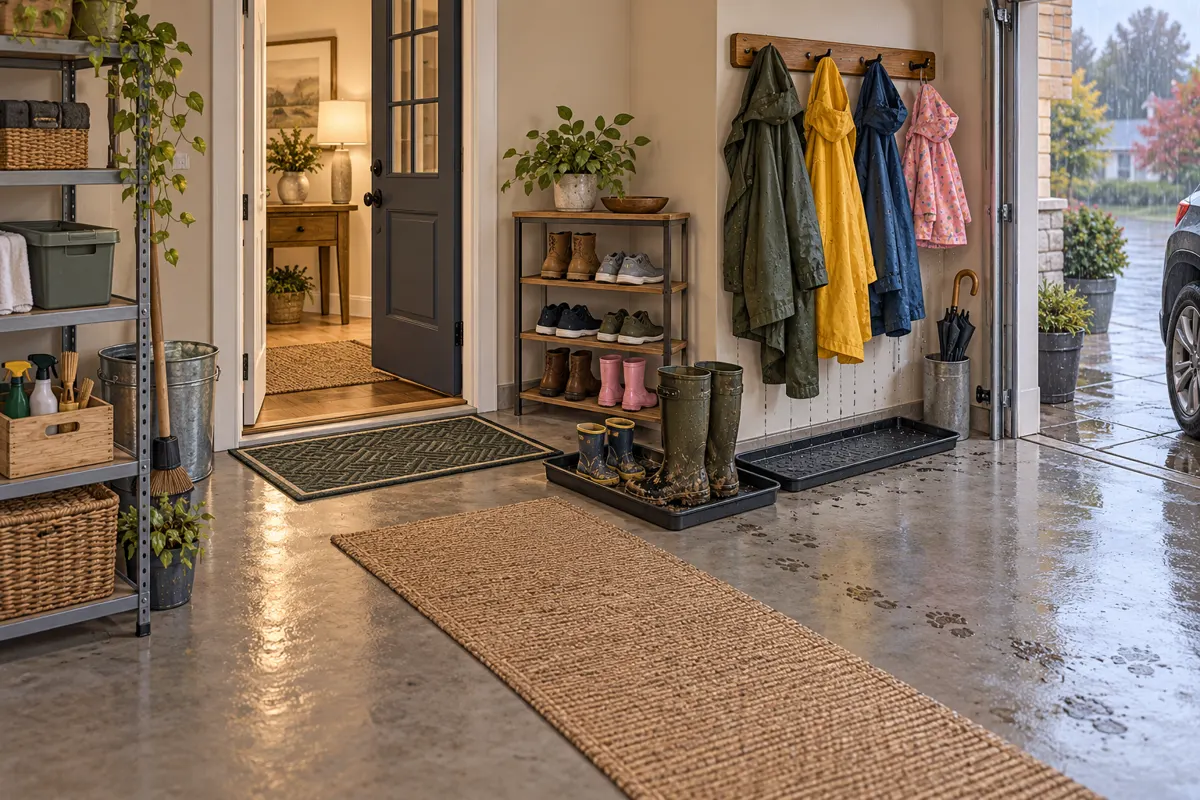
Set up a garage drop zone beside the door into your home with a washable mat, a raised-edge boot tray and open storage for damp shoes and rain gear. Keep clean household supplies in a separate area. The proposed setup below gives each wet item a landing place while leaving the route from the car to the house clear.
Choose a spot beside the house entrance
Start with the place where everyone naturally takes off shoes. A short stretch of wall beside the garage-to-house door is a practical candidate, provided storage does not interfere with the door, parked vehicles or the walking route. Before buying anything, open the door fully and walk through carrying your usual bags.
Our proposed layout puts a washable mat at the stopping point, a boot tray alongside it and hooks above the tray for dripping gear. An adjacent open rack holds shoes once they stop dripping. Add a small seat only if there is room to sit and stand without stepping into the walkway. Benches, hooks and shoe shelves can combine these functions in a compact footprint.
Give drips and muddy soles a landing place
Use the mat for wiping soles and standing while removing shoes. Choose one intended to be washed, and check its care instructions before purchase. Lay it flat so its edges do not catch feet or prevent the door from opening. Keep the boot tray beside the mat rather than in the center of the walking route.
A raised-edge tray contains drips from wet footwear. Size it around the shoes that arrive together on a rainy day, including tall boots if your household uses them. Arrange pairs without stacking them, and leave enough room to lift one pair out without moving everything else.
- A removable tray that you can carry to an appropriate cleaning area.
- A washable mat that fits within the available floor space.
- A separate drip tray beneath hanging umbrellas or raincoats if they extend beyond the shoe tray.
- A nearby place for a cleanup cloth, separate from clean household linens.
Leave damp shoes and rain gear open to air
Use an open shoe rack or open-front cubbies for the drying area. Wall-mounted racks can make use of vertical space when the floor area is small. Give boots enough height so their shafts are not folded just to fit a shelf. A boot rack is another option where boots regularly take up most of the tray.
Our proposed drying routine is to loosen laces, open shoe tongues and separate wet pairs rather than pile them together. Follow the footwear manufacturer's drying instructions, especially for leather or specialty materials. Hang raincoats with space between them, and place umbrellas where their drips fall into a tray. Leave damp gear out of closed bins until it is dry.
Reserve baskets or enclosed shoe storage for dry items. Assigning each person a shelf or cubby can make everyday footwear easier to find. Keep only frequently used pairs here; move occasional shoes elsewhere so the drying area remains available when rain arrives.
Check the layout for wet and clean separation
Treat the tray, mat and hanging area as the wet side of the setup. Our proposal is to keep paper goods, spare towels and other clean household supplies on a separate shelf or in a separate cabinet outside the drip area. Avoid placing them beneath raincoats or beside a tray that must be lifted past them.
- The house door opens fully with shoes and gear in place.
- People can walk between the vehicle and the house without stepping over storage.
- Wet footwear fits inside the tray rather than spilling onto the floor.
- Hooks direct dripping gear over a tray and are within reach of the people using them.
- Open shelves leave room around damp shoes.
- Clean supplies sit outside the wet area.
- The mat and trays can be removed without dismantling the setup.
Reset the drop zone after rainy arrivals
A small drop zone needs a regular reset. The proposed routine below keeps yesterday's shoes from occupying today's landing space and makes cleaning part of putting gear away.
- On arrival, wipe soles on the mat, place wet shoes in the tray and hang dripping gear over its designated tray.
- After the gear dries, return shoes to their assigned shelf and put rain gear in its usual storage place.
- Empty collected water, remove grit and clean the trays according to their care instructions.
- Wash the mat when needed and let it dry before returning it to the floor.
- If shoes repeatedly overflow, remove seldom-used pairs before adding more storage.